The Picture of Dorian Gray
The production of The Picture of Dorian Gray at the Devonshire Park Theatre in Eastbourne created an atmospheric and suitably Gothic interpretation of Oscar Wilde’s late Victorian tale.
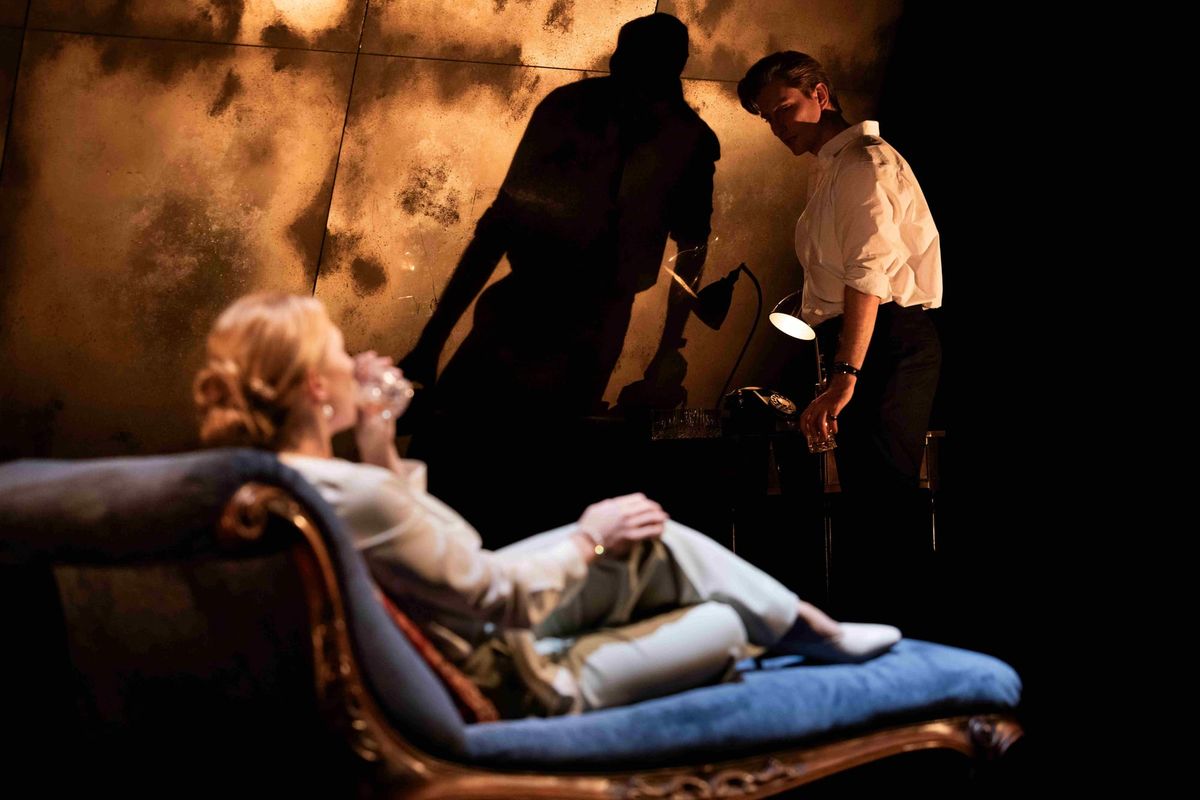
The production of The Picture of Dorian Gray at the Devonshire Park Theatre in Eastbourne created an atmospheric and suitably Gothic interpretation of Oscar Wilde’s late Victorian tale. The theatre itself, built in 1884, provided an appropriate setting for the play, and the production established its dark and slightly threatening mood before the performance had even begun.
As the audience entered the theatre, the low lighting and eerie, monotonous music immediately created a sense of unease. This atmosphere continued throughout the performance, with the music providing an effective background to the action and reinforcing the Gothic nature of the story. The set was relatively simple but used effectively. A slanted metallic backdrop with a worn, almost mirror-like finish was particularly appropriate for a play centred on appearance, reflection and the darker side of human nature. The lighting was also simple but functional, while the uncomplicated scene transitions allowed the action to move forward without unnecessary distraction. The costumes were suitably representative of the late Victorian era and blended naturally into the production without drawing attention away from the characters.
The acting was generally good, with the performers bringing energy and character to their roles. Harry was particularly effective, and his delivery of some of Wilde’s witty one-liners provided welcome moments of humour amid the darker atmosphere. These occasional flashes of wit were a reminder of Wilde’s distinctive writing style and helped to balance the more sinister elements of the story. Sybil’s performance felt slightly weaker than those of the other actors, although the overall standard of acting was good.
However, despite its strengths, the production was not always easy to follow. One of the main difficulties was understanding how much time had passed between scenes. The timeline was often unclear, making it difficult to appreciate the progression of events and the changes taking place in Dorian’s life. The small cast also presented some challenges, as several actors played more than one role. On a few occasions, this caused a loss of clarity, particularly when an actor had previously played a strong and memorable character that remained fresh in the audience’s mind.
The greatest weakness was the portrayal of the portrait itself. The painting is central to the story, yet the reasons behind Dorian’s decision to hide it and the changes taking place within it were not communicated particularly clearly. As a result, the significance of the portrait was sometimes lost, and the audience was left to fill in important gaps in the narrative. For anyone unfamiliar with Wilde’s original novel, it would have been easy to become confused about what was happening and why. Although a stage adaptation cannot include every detail from a novel, that greater clarity was needed to make the central concept of the story more accessible.
The ending was another area that left a sense of uncertainty. It did not feel entirely conclusive, and it was unclear whether Dorian had actually died. Having read the original novel the stories ending was not sufficiently clear in the production itself. This raised an interesting question: how much prior knowledge of the original story should an audience be expected to have when watching an adaptation? The play should communicate its essential events and themes clearly enough to be understood without requiring the audience to have read the book beforehand.
Overall, The Picture of Dorian Gray was a good production with a strong atmosphere, effective staging and some excellent moments of humour. The Devonshire Park Theatre was an ideal venue, and the music, lighting and backdrop worked together successfully to establish the dark, unsettling world of the play. Nevertheless, the lack of clarity surrounding the timeline, the multiple roles and, most importantly, the portrait itself prevented the production from being as effective as it could have been. With a clearer presentation of the story’s central events and a more decisive ending, this could have been a much stronger adaptation. While the production succeeded in creating the right mood, it did not always succeed in making the story clear.
Theatre: Devonshire Park Theatre
Reviewer: Debbie Davison
Date: 13/10/2026
Stars: 3.5