The Hollow
White Lotus meets Rivals in Agatha Christie’s character driven murder story.
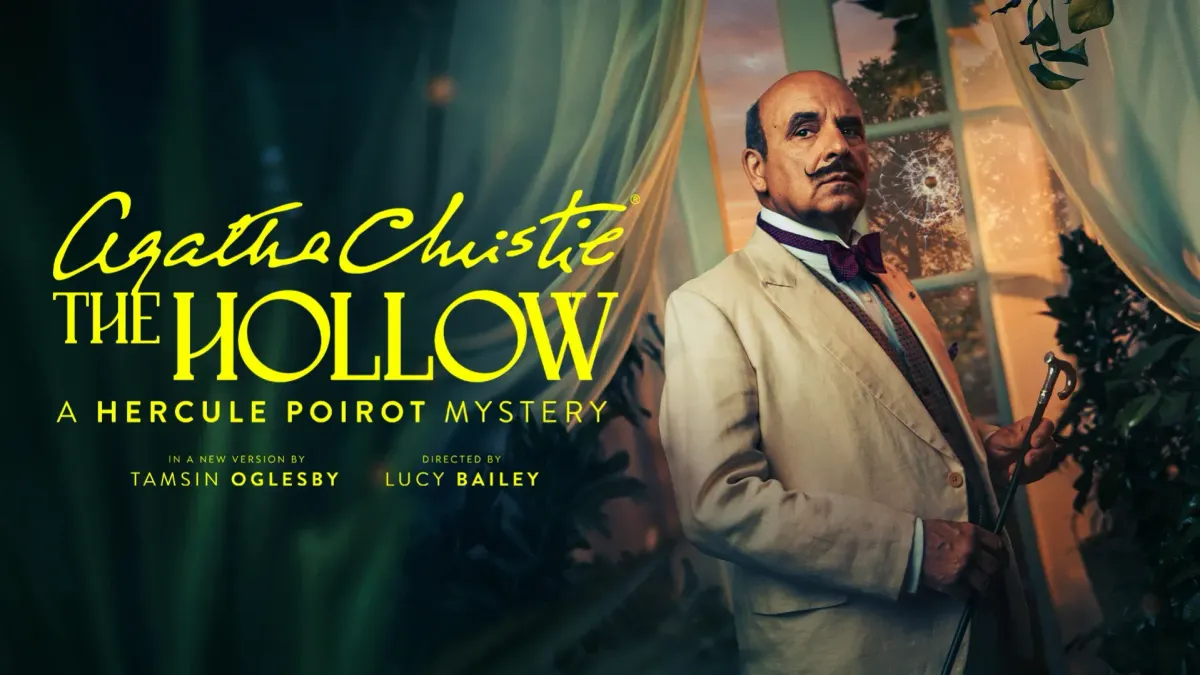
White Lotus meets Rivals in Agatha Christie’s character driven murder story.
The Hollow, originally a novel by history’s most famous crime writer Agatha Christie, debuted in 1946 bringing the beloved character, detective Hercule Poirot, back to people’s pages after he captured the interest of audiences everywhere in the 20 or so stories he had featured in already.
The success of the novel led to Christie herself adapting the story for stage audiences in 1951. Since then, unlike other more famous Christie plays like “The Mousetrap” and “Witness for the Prosecution”, which have had many notable professional London productions, the current UK touring production is the first major London staging since 1982.
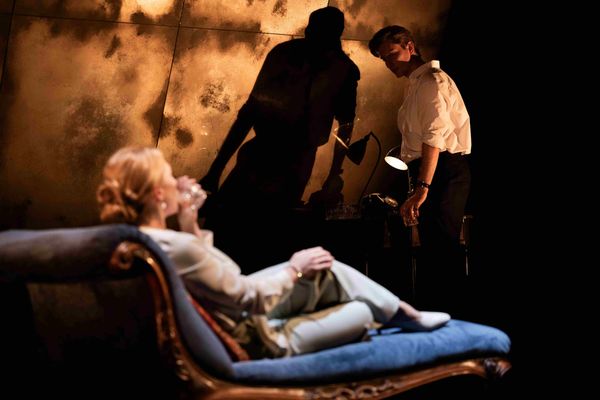
The story is set in a grand country house, where an eclectic mix of characters come together for a summer weekend away from the city. These characters are all interconnected in some way or another such as cherished friendships, ancient rivalries, and recent affairs. The strings of all the relationships are tangled and as the play builds to the end of the first act, the inevitable happens as one thread is pulled too far and someone pays the price for it.
As the second act unfolds, the characters begin to unpack the recent events, revealing that everyone has something beneath the surface of what they are saying. Meanwhile as they’re trying to piece together what happened, and battling their own thoughts Poriot, who is only there as a friend of the family, calls himself to the case.
Tamsin Oglesby, who adapted the play for the current tour, sought to emphasise less of the traditional “whodunnit” and more of a “whydunnit”, shifting the focus from what the audience see, to distinctly what they don’t see.
The staging of the story itself is excellent. With all main actions taking place within the large parlour room which backs onto the start of what the audience is told is a very large country garden, the lack set changes keeps the plot grounded and positions the audience as ‘flies on the wall’ instead of chasing the the story around. Considering the plot is contained to a single weekend, the unmoving set with characters coming in and out only contains the story and audience more into this bubble of bedlam.
The entire cast is powerful when working together as their dynamics are effortlessly believable. Each member of the cast is manages to deliver their character in a distinct but subtle way. The most memorable performance comes from Peter Polycarpou as the famous Belgian detective acting as a quasi-narrator throughout. His sincerity is equally balanced by the comedic timing of his dry-wit. Other notable standouts include Sarah Moyle as Lady Lucy Angkatell who plays the eccentric matriarchal scatterbrain who keeps her dark nature hidden behind ditz. By weaponising the way people perceive her, Moyle gives this character the depth she deserves with a portrayal that mirrors the likes of Lady Macbeth.
This is not the type of show where you are on the edge of your seat eagerly awaiting a plot twist. Rather, the main focus of the story lies with the characters more so than their actions. When you put a group of people, all with flawed personalities, it feels remarkably human. The audience won’t leave discussing what they did and didn’t see coming, but rather who they sympathised with and the reasoning behind every decision they saw.
Theatre: Richmond Theatre
Reviewer: Faith Blackden
Date: 29/10/2026
Star: 4